
Food & drink
How to Order Food in China Without Reading Chinese
How to order food in China without reading Chinese: scan the table QR code, tap dish photos, and use a dozen phrases like "wo yao zhe ge" and "bu yao la".
Manjing Travel
Published 9 min read
01
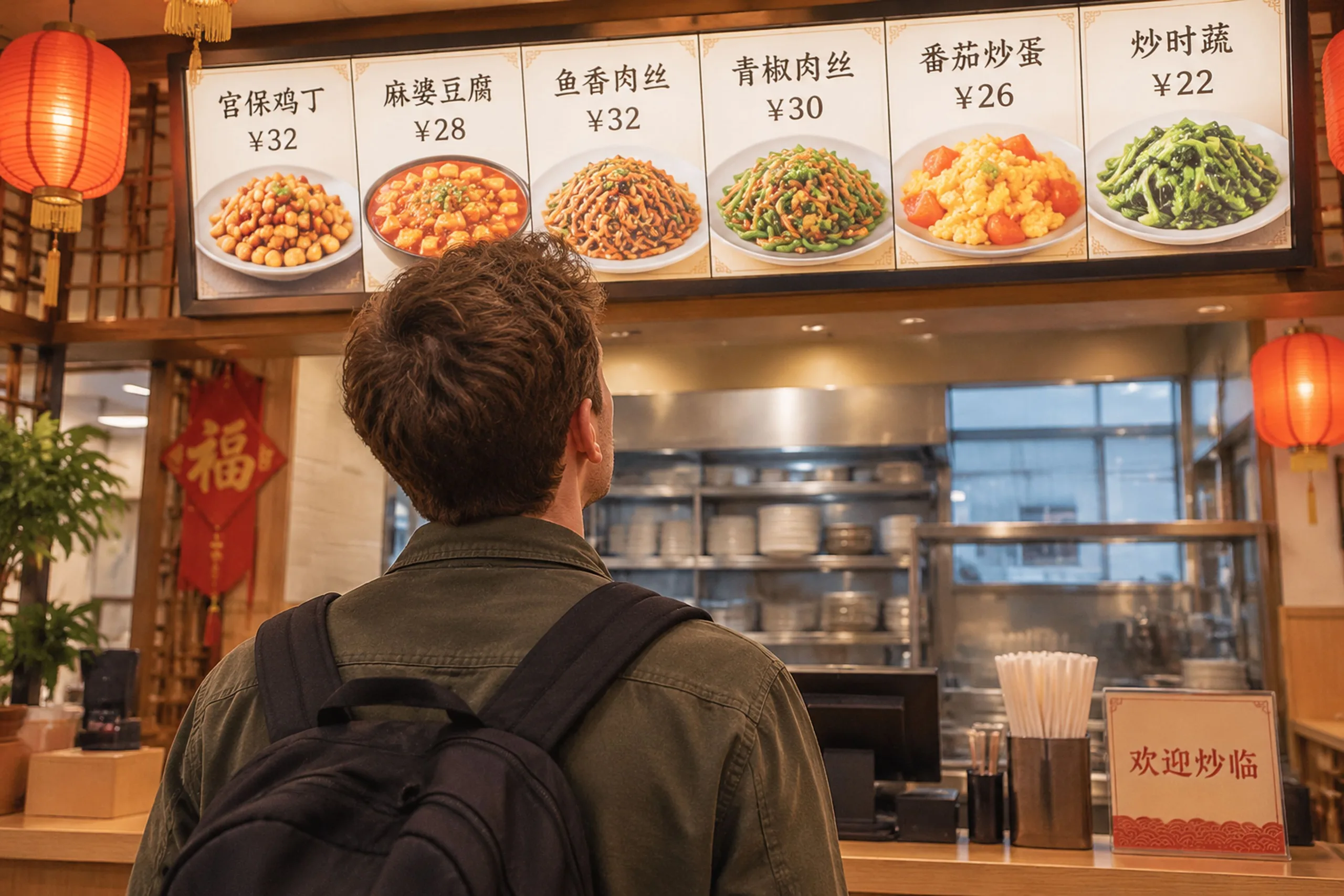
Not knowing Chinese doesn’t mean you can’t enjoy great food in China. You don’t need to be fluent in the language; you simply need a few effective strategies to handle various situations—such as facing an all-Chinese menu, dealing with staff who speak little or no English, or navigating a scenario where a long line is forming behind you. This guide offers practical advice on how to order food in China.
02
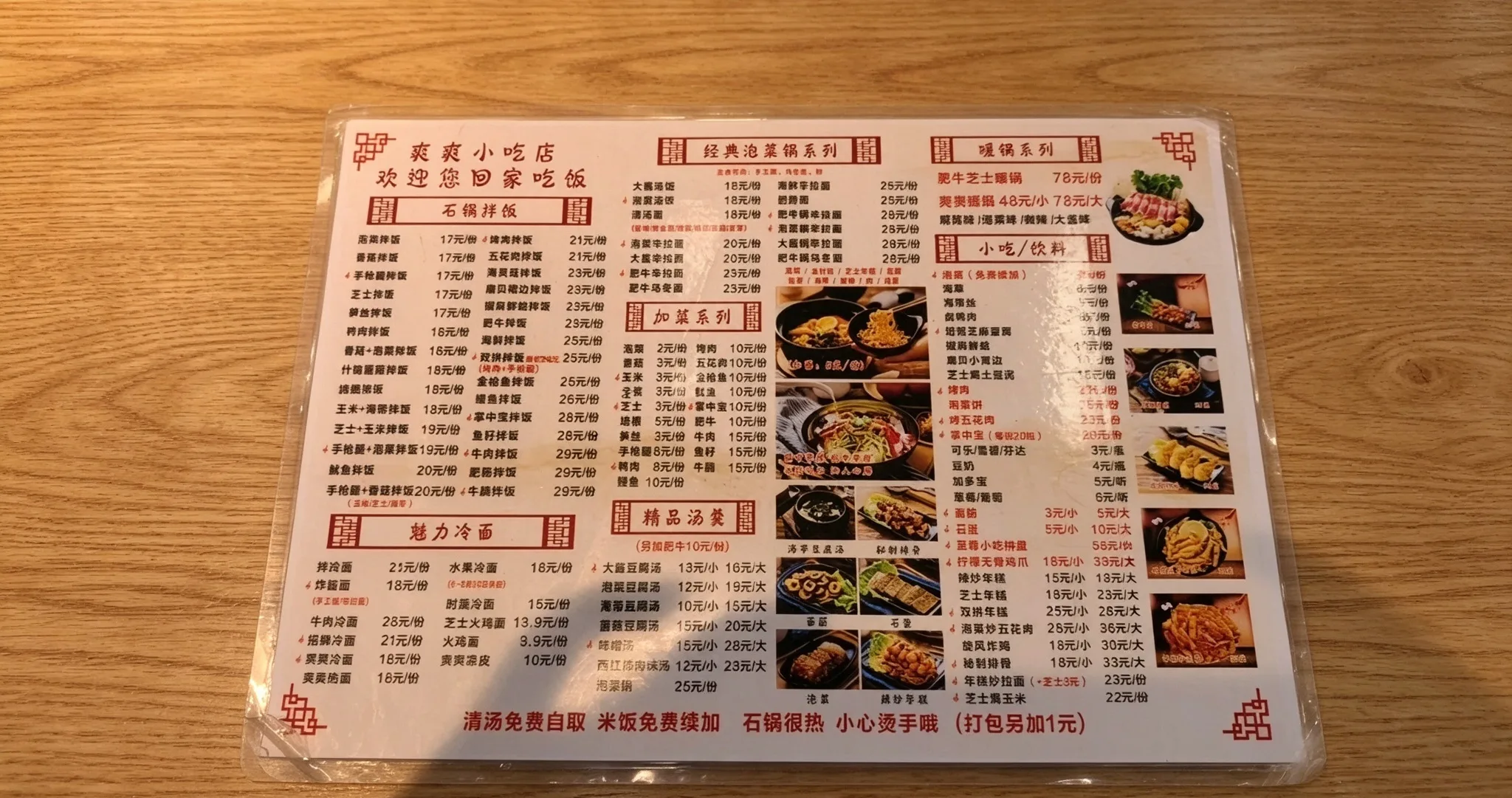
The menu looks difficult because it’s not what you’d expect.
Menus may not be provided in paper form at all. Many restaurants now use QR codes placed on the table; you scan the code to view the menu, place your order, and pay—all from your smartphone. If you find yourself waiting a long time for a menu, it’s not because the server forgot; it’s because you’re expected to scan the code yourself.
Dish names often carry a bit of "cultural baggage." Names like "Ants Climbing a Tree" (vermicelli with minced meat) or "Husband and Wife Lung Slices" (spicy beef offal) might sound like jokes when translated literally. Don’t get hung up on the names—relying on the photos and the list of ingredients is a much more reliable way to know what you’re ordering.
Meals are typically shared. In Chinese dining, dishes are usually placed in the center of the table for everyone to share. If you order individual portions for each person, you will almost certainly end up with far too much food.
Once you grasp these three points, the menu won’t seem so intimidating.
03
Spend ten minutes preparing before you sit down.
Spending these ten minutes now will save you from awkward situations during your next ten meals.
Ensure your phone has internet access. Scanning QR codes to order food and using your camera for translation both consume data. While offline language packs can be a lifesaver, they cannot fully replace a live internet connection.
Download offline Chinese translation packs in advance. As stated in the official Google Translate documentation, once a language pack is downloaded, you can use your camera to translate text even without an internet connection. It is best to download these while connected to Wi-Fi.
Set up Alipay or WeChat Pay beforehand. QR codes found on restaurant tables often only work with one of these two apps—some establishments may only accept one or the other. It’s also a good idea to carry some cash for small purchases at street stalls.
Keep screenshots of useful phrases on your phone. When you have no signal, a screenshot is the most reliable resource.
Have your dietary restrictions written out in Chinese. This means having actual Chinese characters that you can show to a waiter—not just notes in English. We will cover exactly how to write these in Section 05 below.
04
Four ways to order food, ranked by reliability
Option 1: Scan the QR code on the table.
This is the most common method used by chain stores and Chinese restaurants in cities. The process is quite simple:
1Scan the QR code using Alipay or WeChat; your table number is usually detected automatically.
Review the items—check the images first, then the prices. It is perfectly normal for the interface to be in Chinese; even in tourist areas, an English version may not be available.
If the mini-program doesn't have a built-in translation feature, take screenshots of each page and use a translation tool to process them. Since a screenshot is just an image, translation apps with camera-based scanning can read it.
Double-check the total in your cart before hitting "Submit." Some establishments process the payment the moment you confirm your order.
If the QR code won't load or the payment fails, simply head to the counter and ask a staff member to place the order for you.
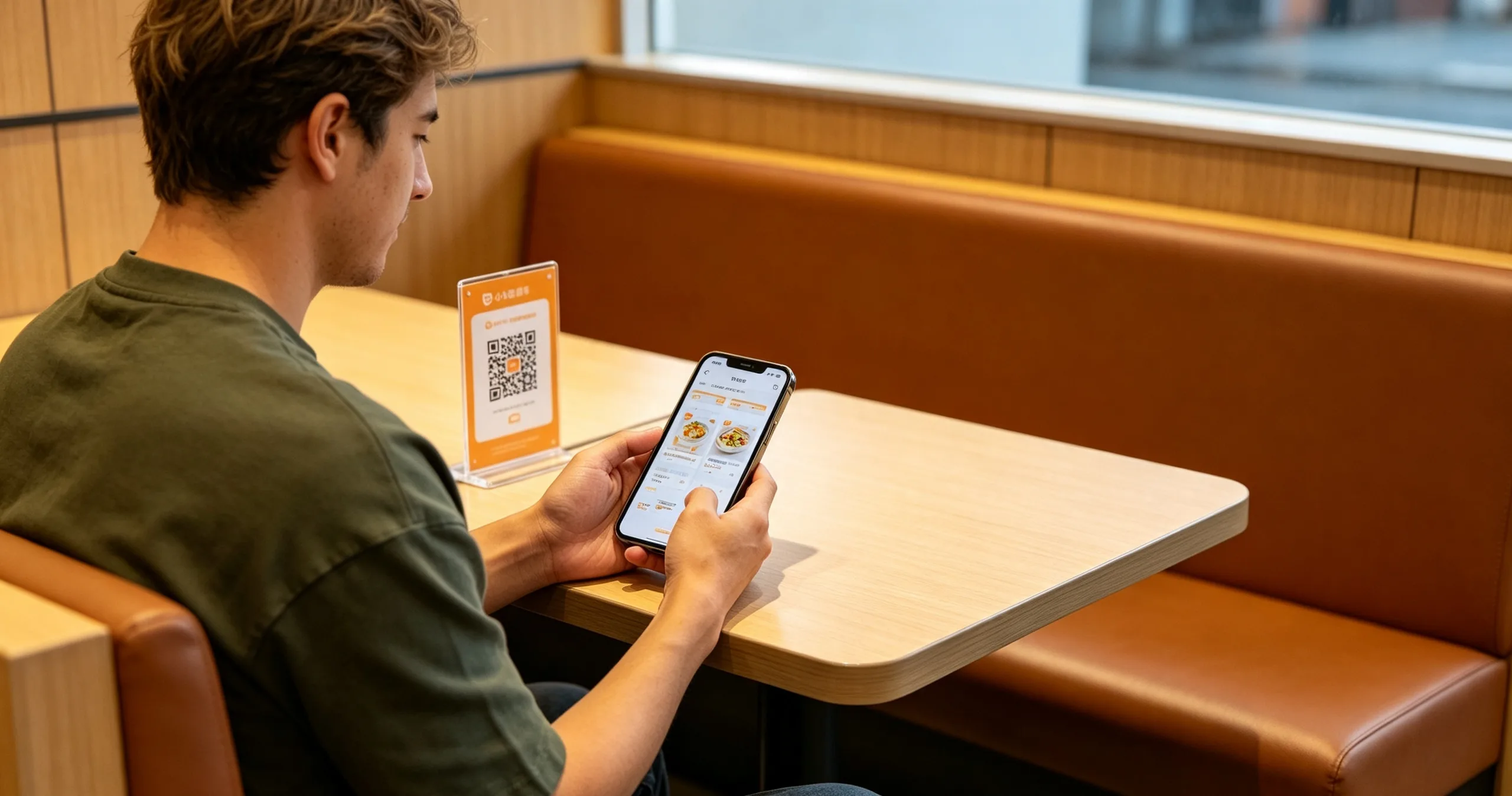
A quick tip: Some of the QR codes on the tables are for reviews or membership programs, not for ordering food. If the page that opens doesn’t look right, just ask someone or take a look at what’s on the table next to you.
Option 2: Use the image menu, then point...
Show this sentence to the server: "有图片菜单吗?" (yǒu túpiàn càidān ma?). Many establishments actually have one, but it might be kept behind the counter rather than being put out. Of course, in many smaller restaurants, the menu pictures might simply be displayed on the wall.
Pointing at dishes is the most natural way to communicate. You can use your fingers to indicate quantities, then take a quick look at what the server has jotted down to ensure everything is correct. At noodle shops or snack stalls, where glass counters or food samples are common, simply pointing and saying "this one" is even faster than speaking in Chinese.

Option 3: Using the camera to translate paper menus
For a paper menu with no pictures and no English, just use your phone’s camera.
Look at the ingredients, not just the dish names. Dish names can sometimes be misleading or cryptic; terms like "chili oil," "peanuts," or "pork" are much less likely to be misunderstood.
Take screenshots of the dishes you’re interested in and show the Chinese text in the images to the server—this significantly reduces the chance of an ordering error.
Translation results should serve only as a reference. They can help you decide what to ask, but they cannot guarantee what is actually in your bowl.
Option 4: Observe what’s on neighboring tables, or simply ask a staff member for a recommendation.
See something that looks good at the next table? Just smile, point, and say, "The same as that table" (*gēn nà zhuō yíyàng*). In a casual eatery, the staff will understand you instantly—it’s far faster than translating the menu item by item.
If you’re truly at a loss for what to order, simply hand your phone to a server and ask for a recommendation. In a bustling, fast-paced local spot, a single suggestion from the staff is far more useful than trying to translate the entire menu.
05
A collection of short phrases to keep on your phone
Chinese | Pinyin | English |
这个 | zhè ge | this |
跟那桌一样 | gēn nà zhuō yíyàng | The same as that table |
有什么推荐? | yǒu shénme tuījiàn? | Any recommendations? |
不要辣 | bù yào là | No spice |
少辣 / 微辣 | shǎo là / wēi là | Mildly spicy / A little spicy |
不要香菜 | bù yào xiāngcài | No cilantro |
我是素食者 | wǒ shì sùshí zhě | I am a vegetarian |
不吃肉、鱼或肉汤 | bù chī ròu, yú huò ròu tāng | I don’t eat meat, fish, or meat-based broth |
我对花生过敏 | wǒ duì huāshēng guòmǐn | I am allergic to peanuts |
清真 | qīngzhēn | Halal |
服务员 | fúwùyuán | Waiter / Server |
买单 | mǎidān | Check, please |
好吃 | hǎochī | Delicious |
If you have an allergy, you can replace "peanuts" with: shellfish, eggs, milk, or soy. If you’re unsure about the wording, ask the hotel front desk to take a look—they’ll be more reliable than a translation app.
06
Allergies, a vegetarian diet, and an aversion to spicy food: these are things you definitely need to keep in mind.
Allergies. Prepare a card in Chinese that clearly states you have an allergy—make it understood that this is a medical issue, not just a matter of "not liking" something. Show this card to the staff as soon as you sit down, and double-check again when each dish arrives. When it comes to your health, never rely solely on a translation app.
Vegetarianism. A table full of vegetables doesn't guarantee the absence of meat; ingredients like meat-based broths, oyster sauce, or even small bits of minced meat can easily be hidden in the dishes. It is more effective to explicitly state "no meat, fish, or meat-based broths" rather than simply saying "vegetarian." In major cities, you can find dedicated vegetarian restaurants, which significantly reduces the risk of errors.
Spice sensitivity. In regions like Sichuan and Chongqing, "mildly spicy" (微辣) can actually be quite hot. If you truly cannot handle spice, be clear that you want "no spice" (不要辣), or ask for the chili to be served on the side. If you’d like to get a head start on what to expect from the local cuisine, take a look at our guides—such as our list of 10 must-try dishes in Hangzhou or our travel guide to Guiyang.
On our 10-day Chinese culinary tour—which covers Beijing, Xi’an, Chengdu, Chongqing, and Guangzhou—we ask participants about their dietary restrictions and allergies before they even sign up. After all, the cuisine in the Sichuan and Chongqing regions can be truly, intensely spicy. The same principle applies if you’re planning your own trip: bring up any dietary needs before your first meal to save yourself the trouble of trying to explain them through gestures at the dining table.

07
Paying the Bill, Tipping, and a Few Etiquette Tips
Most places accept QR-code payments. While mobile payment is generally sufficient in the city, it’s a good idea to keep some cash on hand for small street stalls or when visiting rural areas.
Tipping is not expected. Trying to force money on staff will likely leave them confused rather than grateful.
Some establishments charge for tea, while others provide it for free. Check the menu or the price list on the table so you won’t be caught off guard when the final bill doesn’t match your expectations.
Is it impolite to point at items on the menu?
Nope. Small eateries and street stalls only have a limited selection to begin with. You just indicate the quantity with your fingers, make sure the staff got it right, and that’s all there is to it.
Should I leave a tip?
No need. You can simply pay by scanning a QR code, using cash, or swiping a card—there’s no additional tipping involved.
Do Chinese restaurants have English menus?
Some do—they are more common in tourist areas, hotels, and large cities—but many everyday restaurants only have Chinese menus, or rely on pictures or photos displayed on the walls.
What if I am a vegetarian or have food allergies?
Before you start eating, present a written note in Chinese explaining your requirements. Translation apps might overlook ingredients like meat broth, lard, or dried shrimp, so it is best to confirm these details in person. If there are potential medical risks, opt for simpler dishes or choose a restaurant that is accustomed to handling special dietary requests.
Can you order food in China if you don't speak Chinese?
Yes, you can. You can use the QR code on the table in conjunction with an on-screen translation tool, point to pictures or food models, and show the staff written Chinese phrases. Most servers are accustomed to assisting customers who do not speak Chinese with their orders. If you have any food allergies, carry a note in Chinese with you.
Published 2026-11-25 by Manjing Travel.
Still have a question this did not answer?
A named planner replies within one working day. No call centre and no chatbot.
Ask a planner