
Travel essentials
Arriving in China: airport, customs and first-hour checklist
The first airport hour is easier when your entry details, hotel address, data plan and onward arrangements are available without searching for a signal.
Manjing Travel
Published 7 min read
01
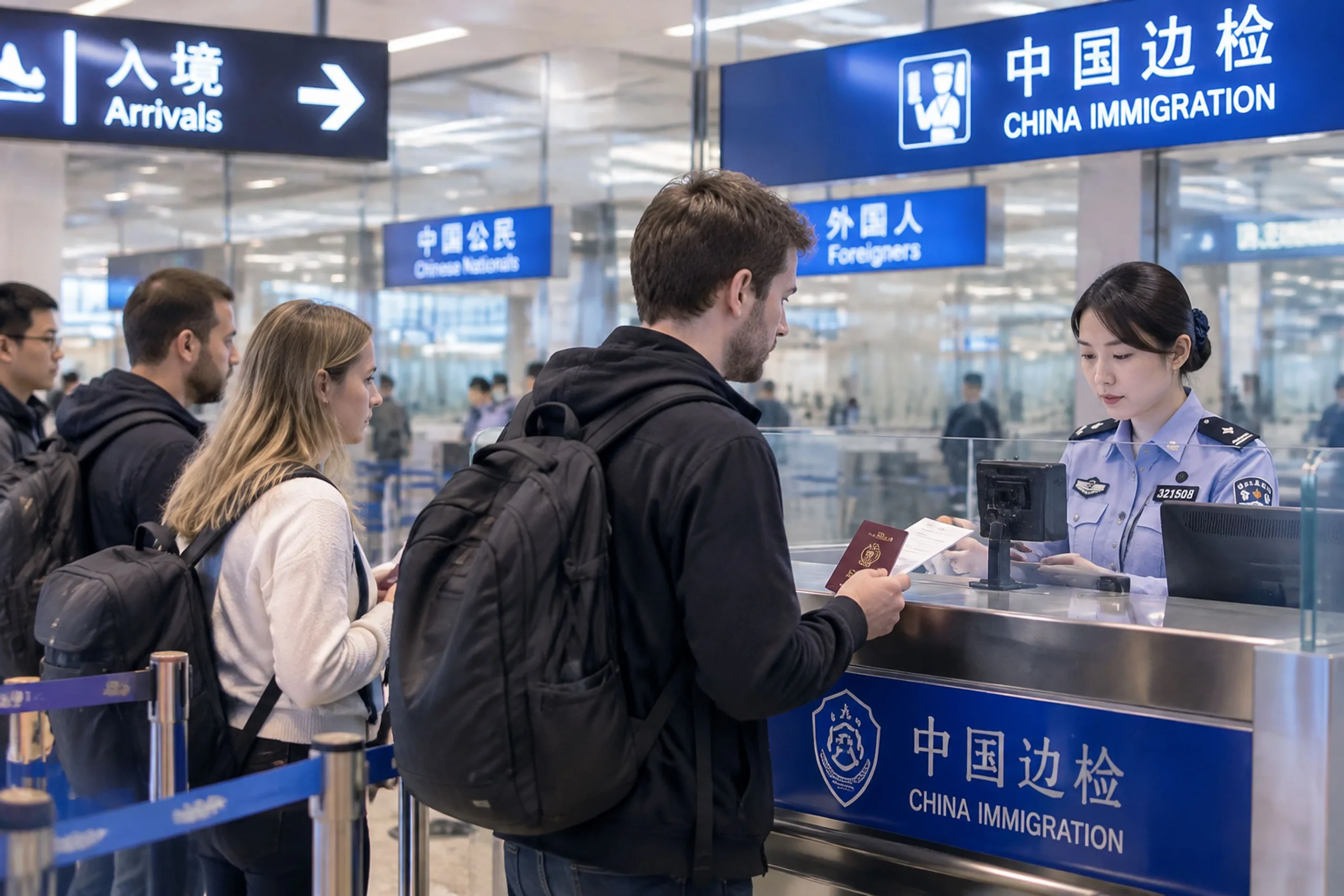
The first day after a long-haul flight is often fraught with minor but disruptive issues—misplaced documents, an inability to connect to the internet, unfamiliarity with entry procedures, or confusion regarding onward travel arrangements. Based on the information you provided, this guide offers a detailed, step-by-step walkthrough. It focuses on essential pre-departure preparations, entry and immigration processes, baggage and customs procedures, internet connectivity, airport pickups, and how to navigate the first two hours after arrival.
02
I. Things to do beforehand
What documents should be prepared in advance?
Before boarding, gather the documents you will need for the first day into a folder that remains accessible offline. Recommended items include:
Passport
Visa or proof of entry
Hotel name and address
Onward travel ticket
Emergency contact information
Insurance details
Keep these materials together so they are easily accessible at the airport, during immigration checks, and on the way to your hotel. While screenshots are certainly useful, it is still worth carrying printed copies of addresses. Should your phone run out of battery, your internet connection fail, or a screenshot prove difficult to locate, a paper backup offers a more reliable solution in critical moments.
Why emphasize "offline"?
Upon arrival, internet access may not be immediately available. Airport Wi-Fi might require an SMS verification code or registration, and coverage may not extend to every part of the terminal. Therefore, saving your passport details, hotel address, contact information for your airport pickup, and insurance documents in a format accessible offline can help reduce your reliance on a live internet connection.
03
II. Entry Information and Immigration Inspection
1. For entry-related information, prioritize using official channels.
Before traveling, foreign visitors may be able to complete their entry information using the official arrival card service provided by the National Immigration Administration of China. Please note that this service and airport procedures are subject to change; therefore, you should always use the official government website rather than paid third-party forms. Third-party services may not only incur unnecessary costs but also fail to ensure that the information provided aligns with current official requirements.
If you are unable to complete the process online, there is no need to worry. Simply follow the on-site signage and the instructions provided by airport staff upon your arrival.
Content: Provide details such as your passport information, accommodation address in China, flight information, travel history, and a declaration of your health status.
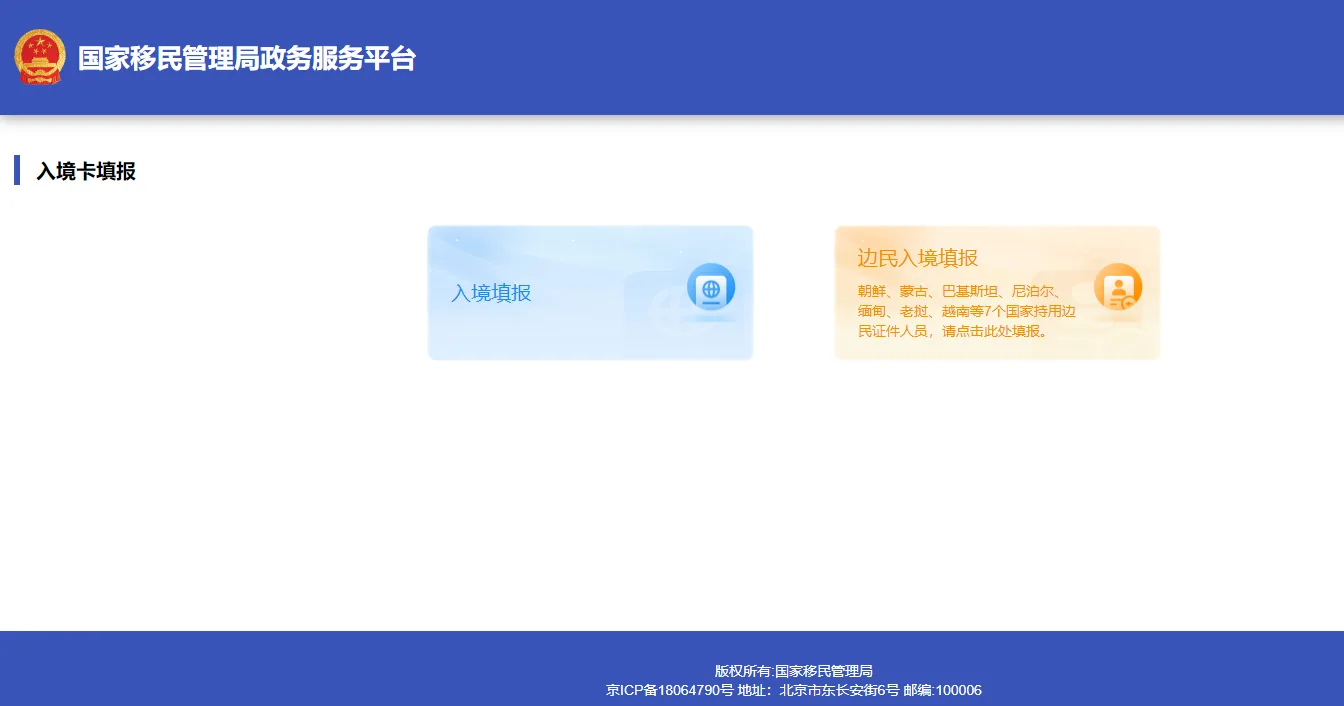
You may complete your entry information via this link: https://s.nia.gov.cn/ArrivalCardFillingPC/entry-registation-notice
2. How should one cooperate with border inspections?
During the inspection process, ensure that you:
Provide clear and concise answers to questions
Keep your passport and supporting documents easily accessible
Avoid burying your documents deep within your luggage
Depending on the airport and the specific procedures in place, you may undergo document checks, use self-service kiosks, or provide biometric data—either before reaching the check-in counter or as part of that process. The key is to follow the sequence of steps as directed on-site; do not assume that the procedures at your destination airport will be identical to those at your departure airport.
3. On-Site Protocol
Follow the signage and instructions provided by staff on-site during the entry process. Familiarizing yourself with the procedure beforehand is intended to help reduce anxiety, not to replace the need for real-time judgment. If you are unsure about any step, it is always safer to ask a staff member directly rather than trying to guess.
04
III. Luggage and Customs
First, collect your luggage, then follow the signs for Customs.
Upon arrival, collect your luggage from the correct baggage carousel and then follow the signs toward customs. Do not overlook customs declaration and inspection requirements in your haste to leave.
If you have items to declare, use thenel; if not, simply use the "Nothing to Declare" channel.
Check the rules for special items before departure.
If you are carrying any of the following items, you should check the current customs and airline regulations before your departure:
Medications
Food products
Plants
Large amounts of cash
Restricted items
For prescription medications, in particular, you should keep them in their original packaging and, where appropriate, carry supporting documentation. Requirements may vary depending on your destination and the carrier; verifying these details in advance can help reduce the risk of having items confiscated, being questioned, or facing delays.
There are separate rules for power banks and lithium batteries.
Power banks and lithium batteries may be subject to specific regulations during air transport, including on connecting domestic flights. You should verify the carrier’s current restrictions, labeling requirements, and policies regarding carry-on items. Please note, in particular, that a power bank accepted on an international leg of your journey might still be rejected on a subsequent domestic flight if it fails to meet the applicable rules for that segment. Therefore, do not rely solely on your experience from a previous leg of your trip.
05
IV. Before leaving the terminal: Establish a working network connection first.
1. Do not rely on airport Wi-Fi as your primary connection.
Do not rely on airport Wi-Fi as your primary means of connectivity upon arrival. It may require SMS verification or registration, and coverage might not extend to every part of the terminal. A more reliable approach is to set up a roaming plan or a travel eSIM before you depart, so you can activate it as soon as you arrive.
2. Open key apps before leaving the arrival area.
Before leaving the arrival area, it is advisable to ensure that the following types of apps are ready for use:
Maps
Digital wallets
Ride-hailing apps
This helps you avoid reaching the curb only to discover that you cannot navigate, make payments, or book a ride.
3. Confirm details in advance if you are being met at the airport
If someone—such as a friend or a tour guide—is meeting you at the airport, be sure to confirm the following in advance:
The specific meeting point
An alternative contact number
Do not rely on just one way to get in touch. Airports are crowded and mobile signal can be unreliable, so having a backup plan is a safer approach.
4. Follow official transport guidance when traveling independently
If you are traveling on your own, follow the airport’s official transport signage or use your own ride-hailing apps. Be wary of—and simply ignore—anyone who approaches you inside the terminal offering rides in unmarked vehicles or quoting vague, "fixed" prices. Opting for authorized, legitimate transport services is far safer than accepting impromptu offers from unknown individuals.
06
V. Recommended Sequence for the First Two Hours After Arrival
Suggested Order
A logical sequence of steps upon arrival is as follows:
Immigration and passport control
Baggage collection
Customs clearance
Restoring mobile data/internet access
Checking cash or payment methods
Heading to your hotel or proceeding to a connecting trip
This sequence helps minimize back-and-forth movement and ensures that the most critical tasks are completed before leaving the airport.
Avoid overpacking your schedule on the day of arrival after a long-haul journey.
It is not advisable to plan elaborate city sightseeing for the day you arrive following a long-haul flight. Instead of rushing to visit your first attraction, it is better to take a shower, have a meal, and get some rest early. This will generally leave you in better shape for the following day, making it a more suitable time to officially begin your itinerary.
Save the hotel address in Chinese and English. When the hotel is outside a major city, confirm the transfer time and whether the property accepts foreign passports before you fly. Our guides to hotels and registration, eSIMs, and maps cover the next practical steps.
Published 2026-10-19 by Manjing Travel.
Still have a question this did not answer?
A named planner replies within one working day. No call centre and no chatbot.
Ask a planner